Lens Index Guide:
From
Standard to Ultra-thin
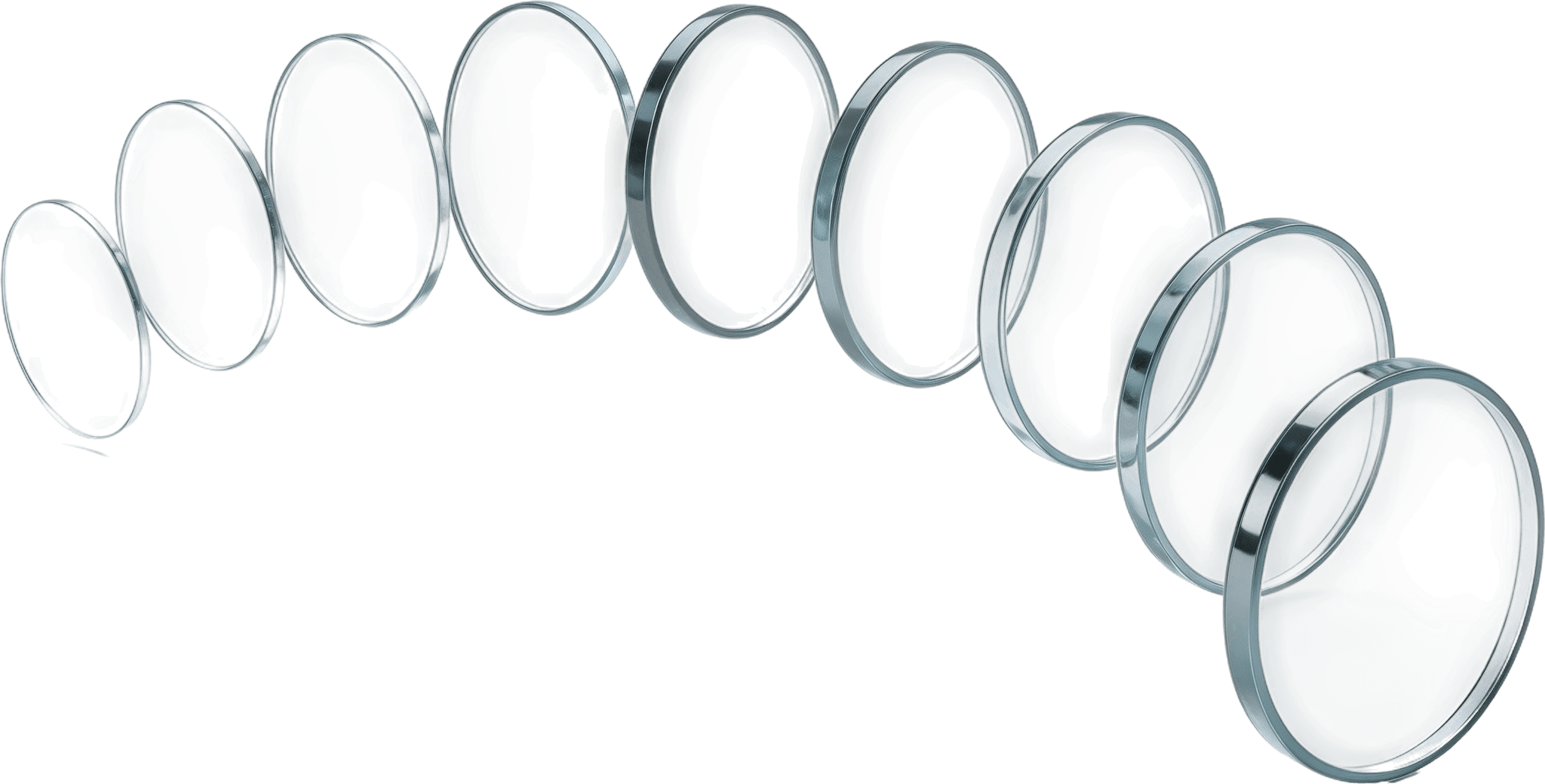
Which index is best suited to which power range
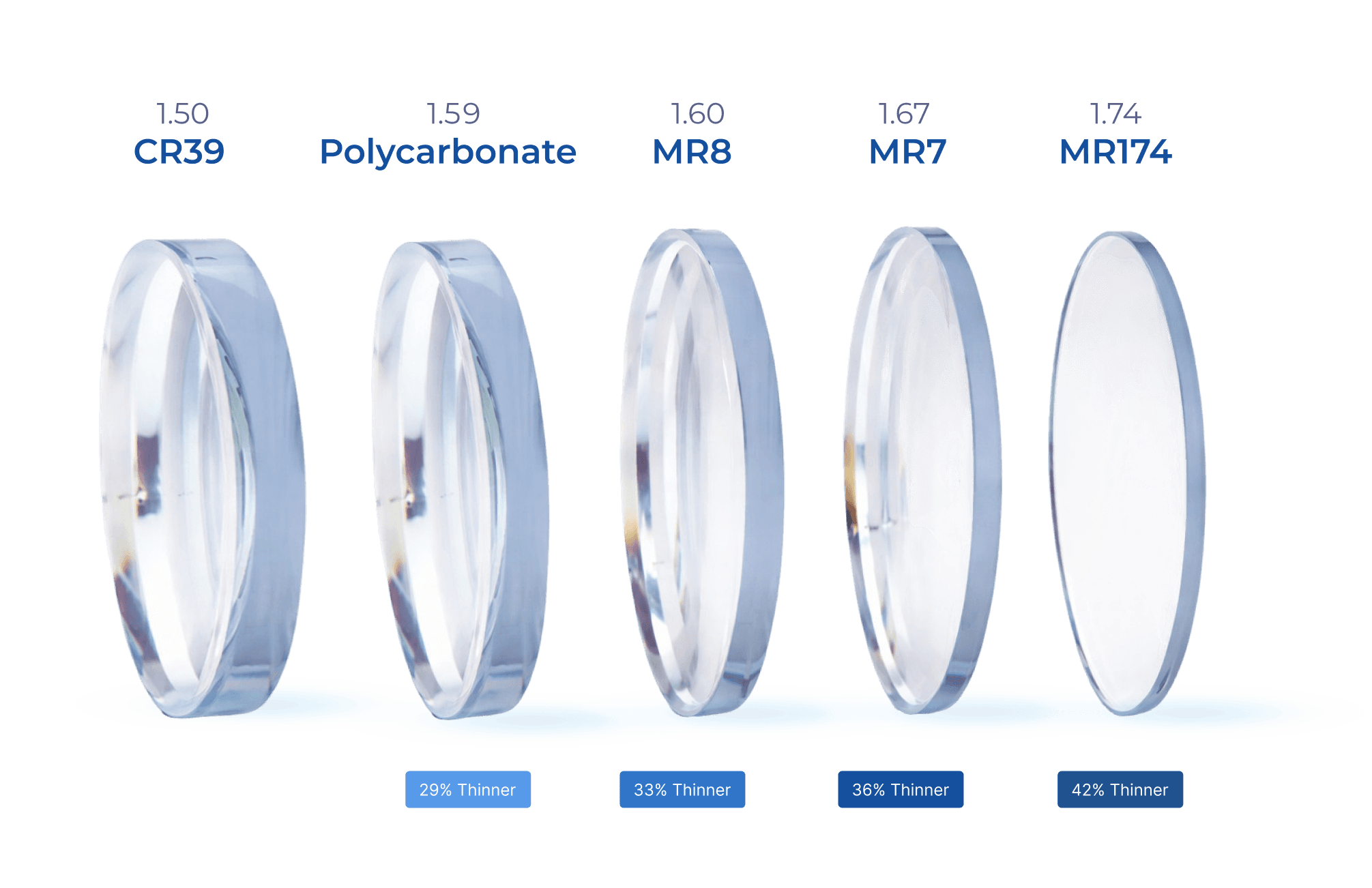
*Thickness in comparison to 1.50 CR39 | Thickness comparison at power -4.00
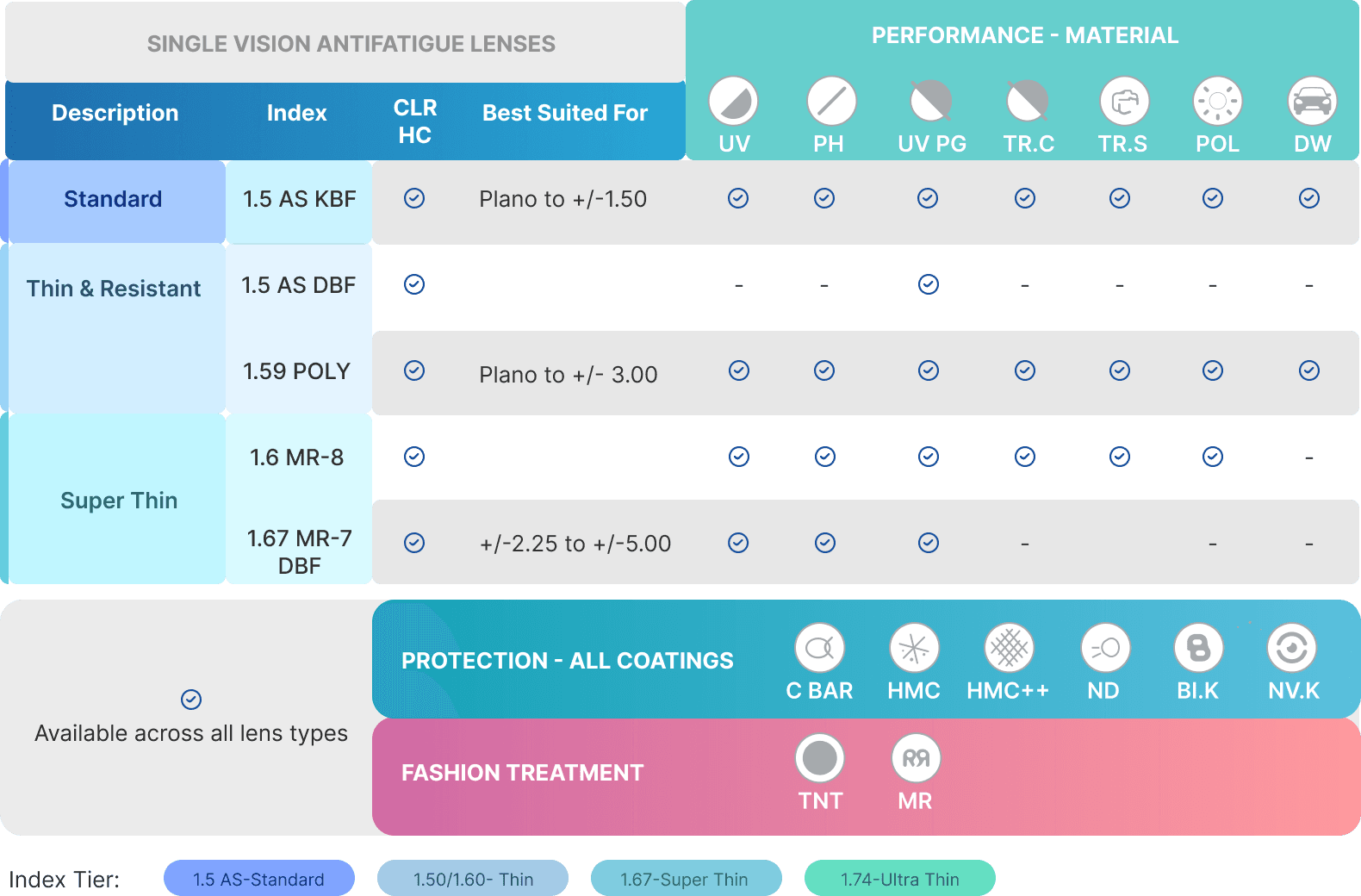
Single Vision Lenses:
Single Vision Lenses
Digital
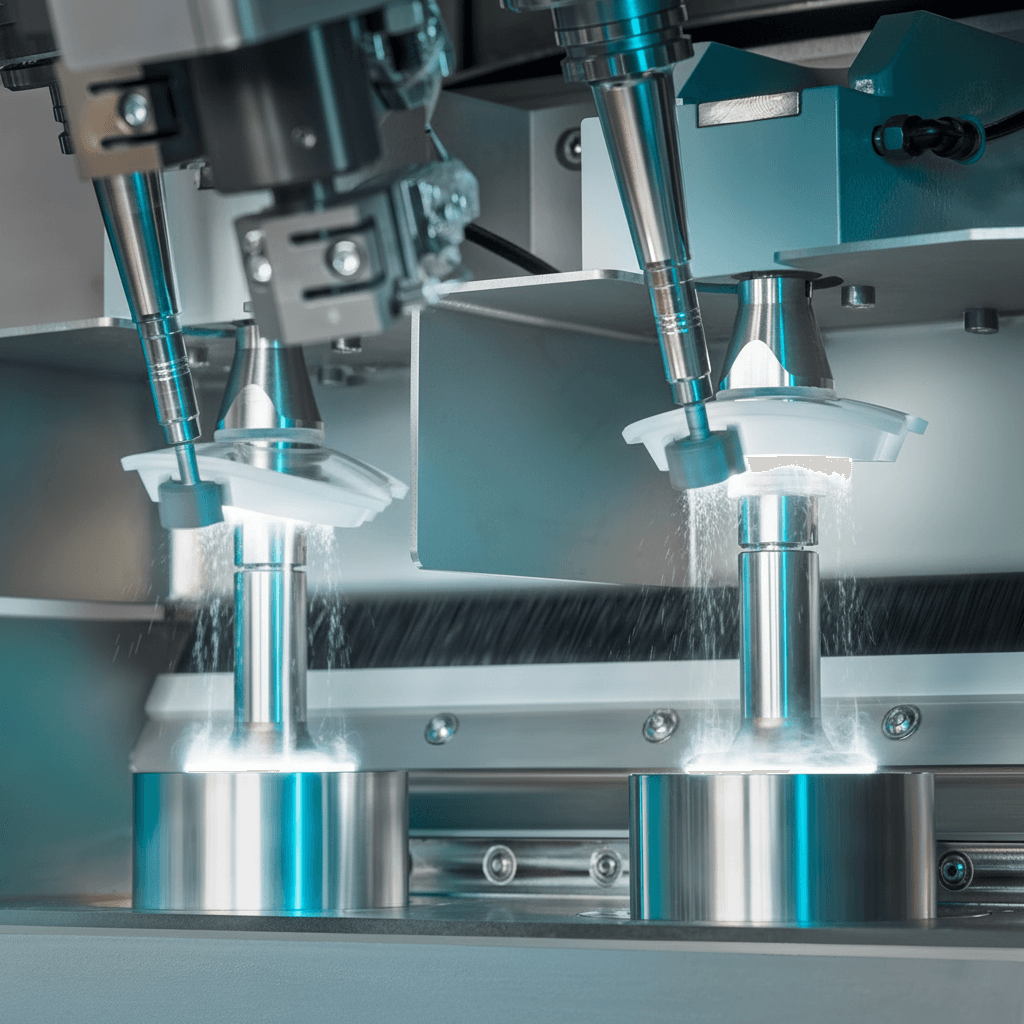
High-precision lenses manufactured using advanced computer-controlled surfacing technology. While they technically correct vision at only one focal length like traditional single vision lenses, they are sculpted with up to six times more precision and can be customized to your specific eye measurements and frame choice.
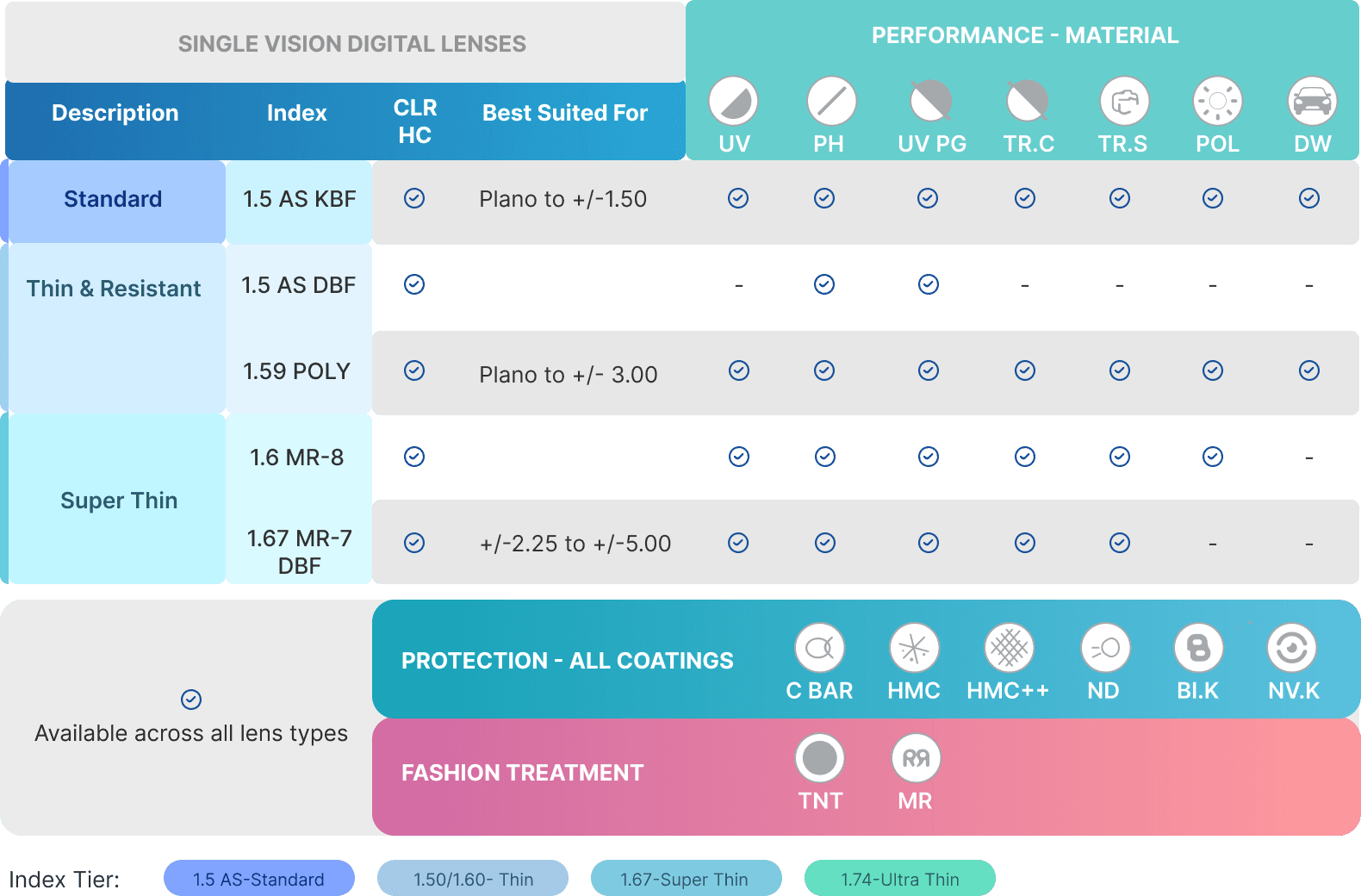
Key benefits over traditional lenses
Edge-to-Edge Clarity
Unlike standard lenses where vision is clearest in the center, digital lenses minimize peripheral distortion, providing a wider field of view.
Extreme Precision
They are manufactured in power increments of 0.01 diopters, compared to the 0.125 to 0.25 increments used for traditional lenses.
Who should Consider them
High Prescriptions
People with strong corrections or high astigmatism notice the most significant improvement in peripheral clarity.
Frequent Screen Users
Individuals in their 20s to 40s who experience tired eyes after using smartphones or computers.
Large Frames
Since larger lenses naturally have more edge distortion, digital surfacing is often necessary to keep the vision sharp across the entire glass.
Single Vision Lenses
Sports DMT
Digital Motion Technology technique is used to create high definition, prescription compatible lenses for wraparound frames. These lenses are designed to eliminate the swim effect and peripheral distortion common when putting high prescriptions into curved sports frames.
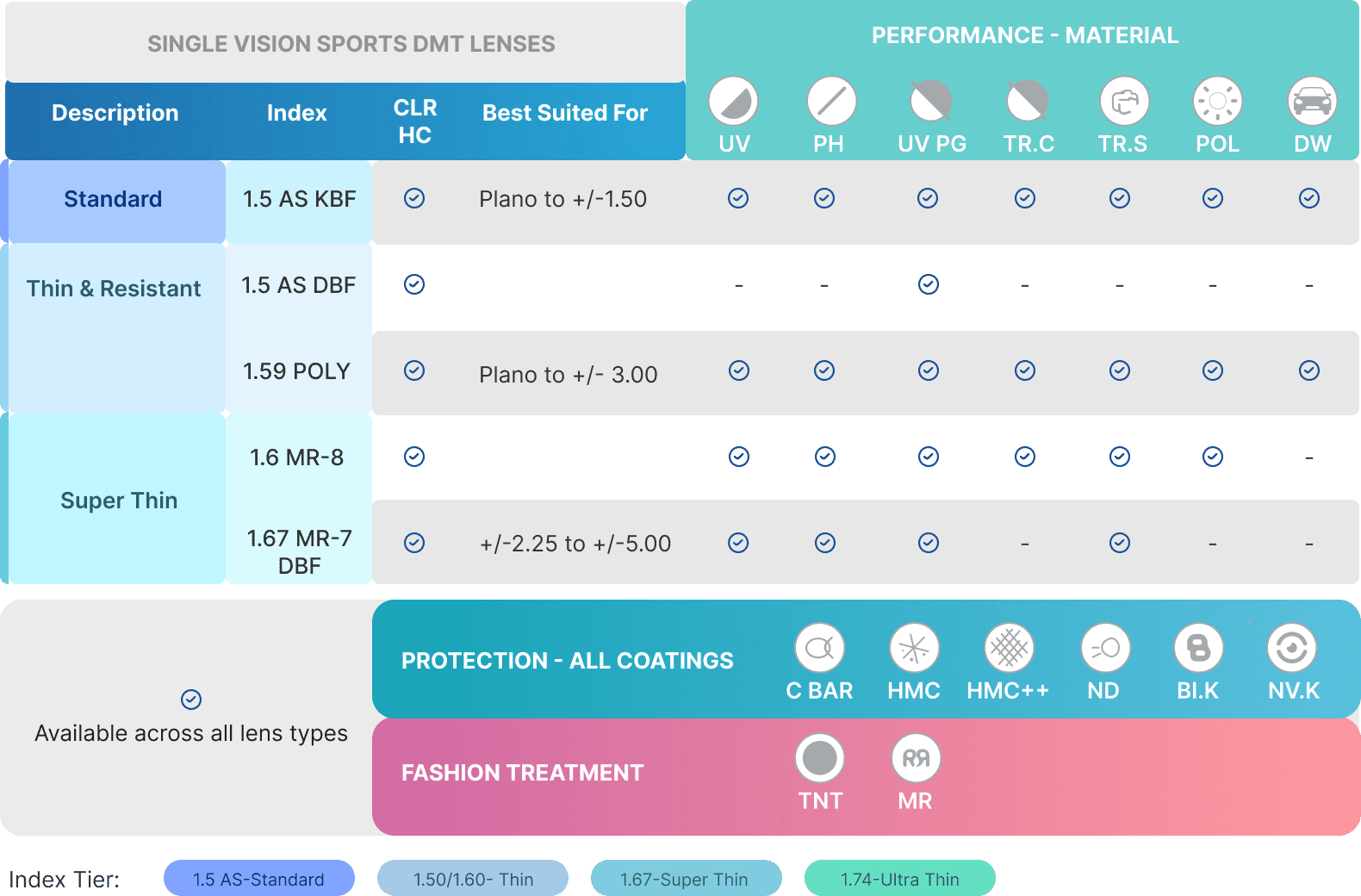
Key benefits of DMT Sports Lenses
Peripheral Clarity
Uses advanced computer algorithms to optimize the lens surface for every angle of your eye’s movement, providing a wider field of clear vision.
Impact Resistance
Usually made from high quality polycarbonate or MR-8 materials, making them shatterproof and safe for high-impact sports like basketball or cycling.
Adaptive Coatings
with Photochromic (transition) technology to adjust tint based on sunlight or Polarized filters to cut glare from water and roads.
Who should Consider them
Athletes with High Prescription Demands
Anyone who needs vision correction and plays sports, as these lenses offer customized, wide-field vision that reduces peripheral distortion commonly found in standard, highly wrapped sports frames.
Impact Resistance
These individuals benefit from optimized intermediate and distance vision, which helps with viewing cycling computers, watches, or the terrain directly in front of them without losing distance clarity.
Outdoor Sports Enthusiasts (Golf, Skiing, Fishing)
People who need increased contrast to see details (like a golf ball against the sky or contours in snow) and protection from changing light conditions, especially when using polarized or photochromic tints.
Individuals Playing High-Impact Sports
People engaging in activities where eye safety is paramount, such as basketball, squash, or racquet sports, where durable materials (like polycarbonate or Trivex) are required for safety and protection.
Individuals Facing Challenging Environmental Factors
Those playing in high humidity (needing anti-fog coatings), windy conditions (requiring a protective wrap-around fit), or changing light (requiring fast-acting light-adaptive tints).
Single Vision Lenses
Antifatigue
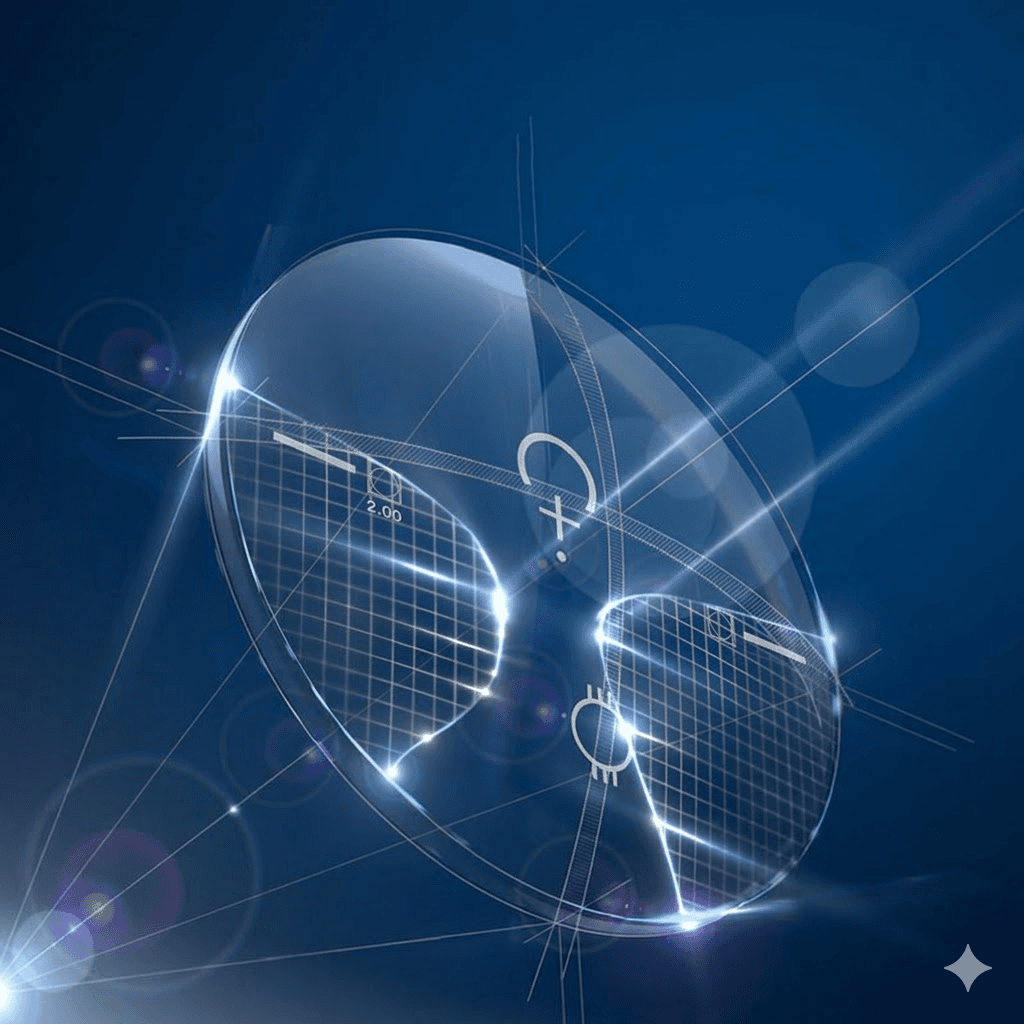
Single vision anti-fatigue lenses are designed to bridge the gap between standard glasses and multifocals. Unlike regular single vision lenses that have one power across the entire surface, these feature a subtle magnification boost (typically between +0.40D and +1.00D) in the lower portion to relax the eyes during close up tasks.
How they Work
Dual-Zone Design
The top part of the lens provides clear distance vision according to your standard prescription.
The “Power Boost”
The bottom section features a mild increase in power that aligns with where your eyes naturally drop when looking at a smartphone or book.
Muscle Relief
This extra magnification does the “heavy lifting” for your ciliary muscles, which normally have to strain to maintain focus on near objects for long periods.
Key benefits of Antifatigue lens
Reduced Digital Strain
Specifically targets symptoms like headaches, dry eyes, and blurred vision caused by prolonged screen use.
Easy Adaptation
Because the power shift is much milder than in progressive lenses, there is almost no “swim” effect or peripheral distortion, making them very easy to get used to.
Higher Productivity
By delaying eye fatigue, these lenses can help maintain focus and energy levels throughout a workday.
Who should Consider them
Young Professionals & Students
Those with high reading or screen-based demands.
Early Presbyopes
People starting to notice subtle near-vision strain but who are not yet ready for full progressive lenses.
Non-Prescription Users
They can even be used by people who don’t need distance correction but want relief from digital fatigue.
Progressive Lenses:
HD PAL
The Standard Digital
Daily Users

Optimized UHD PAL
The Balanced Performer
Experienced Users

Customized HDV PAL
The High-Activity Design
Maximum Comfort

Individual 4K i-Smart
The Elite Flagship
Users Seeking Maximum Personalization & Precision

HD PAL
HD Pal are digitally produced to provide exceptional optical precision. Viewing areas work together smoothly to provide –
- •Natural head & eye movement
- •Smooth transition from far to near with clear mid-range vision
- •Wider field of view and less distortion
Superior visual comfort
Vision first design ™
Smooth graduation of powers
Thinner & lighter with appearance of a single vision
Available across all lens types

Optimized UHD PAL
Optimized UHD PAL provide wide near zone for natural eye movement with smooth graduation of power.
These lenses are suitable for all frame types
Superior visual comfort
Vision first design ™
Sharper viewing in all directions
Minimizes blurring or swim effect
Available across all lens types
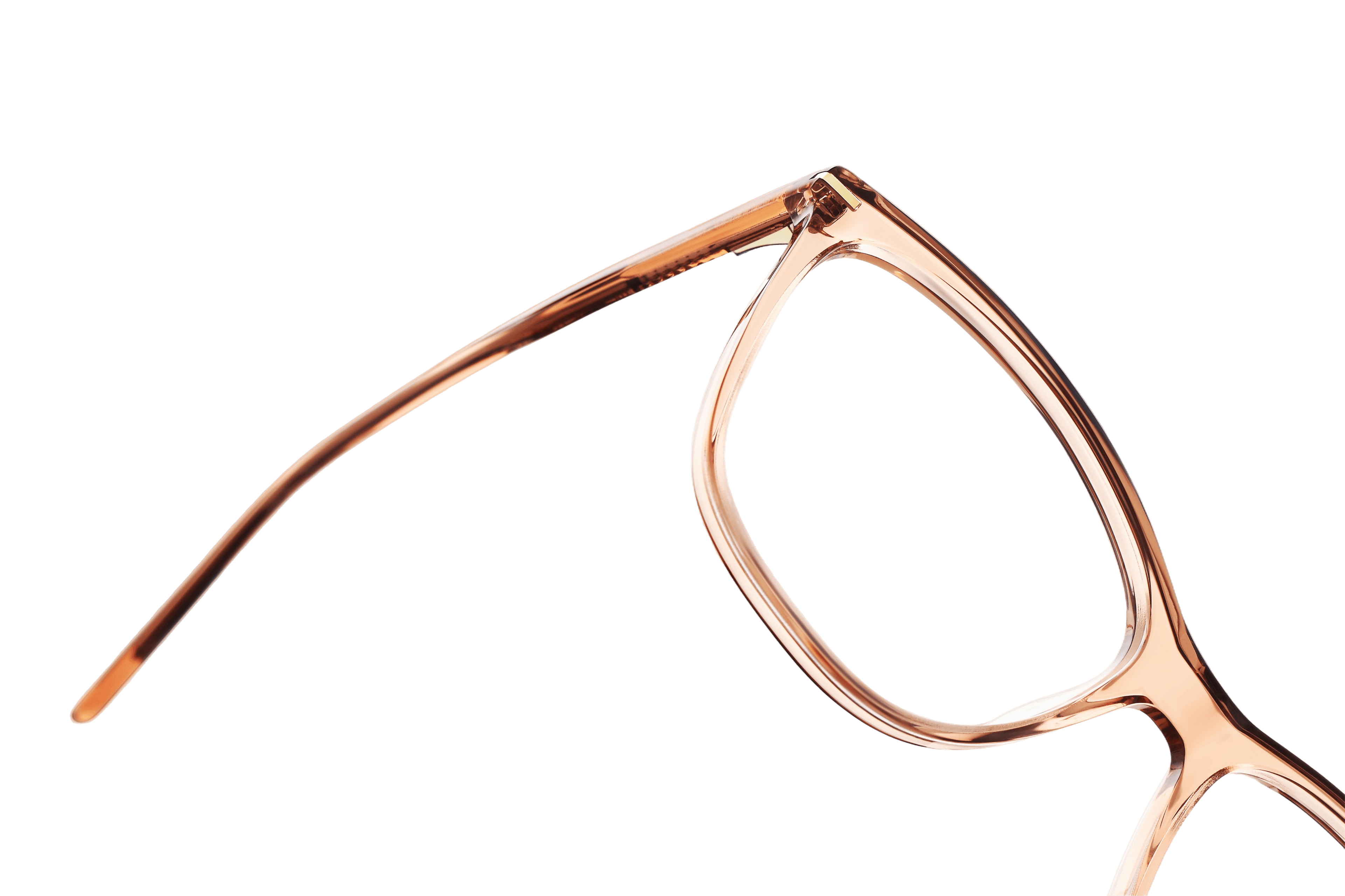
Customized HDV PAL
The Customized HDV PAL offer prescription compensation which ensures the Rx is adapted to both the wrap angle of the frame as well as the frame wearing style of the individual patient.
Superior visual comfort
Vision first design ™
iSync ™
Sharper transition between lens powers
Clear vision & Minimal blurring
Available across all lens types
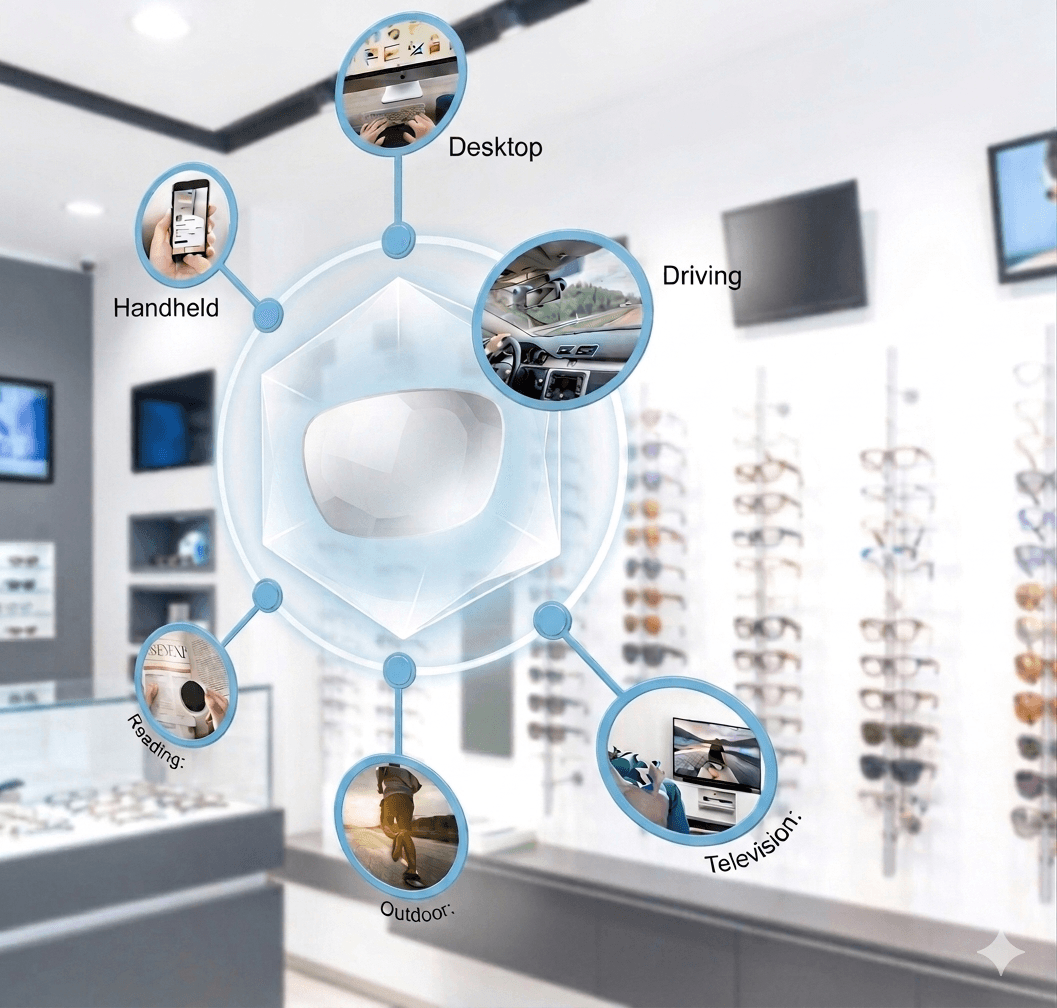
Individual 4K i - Smart
With the Individual 4K i - Smart lenses, the patient can design a personalized progressive lens to suit their lifestyle needs
These lenses are powered by a combination of our best technologies to ensure the best quality of vision
Superior visual comfort
Vision first design ™
iSync ™
Sharper transition between lens powers
DRO ™
Significant reduction in oblique astigmatism in the reading area
Available across all lens types
DMT-i Smart Progressive lenses
Our sports DMT i – Smart Progressive lens helps your patients achieve their best athletic performance.
The lens can be customized to give a wide field of clear vision across various lens materials.
Wrap fit
Asymmetrical design
iSync ™
Contrast Enhancement
Available across all lens types
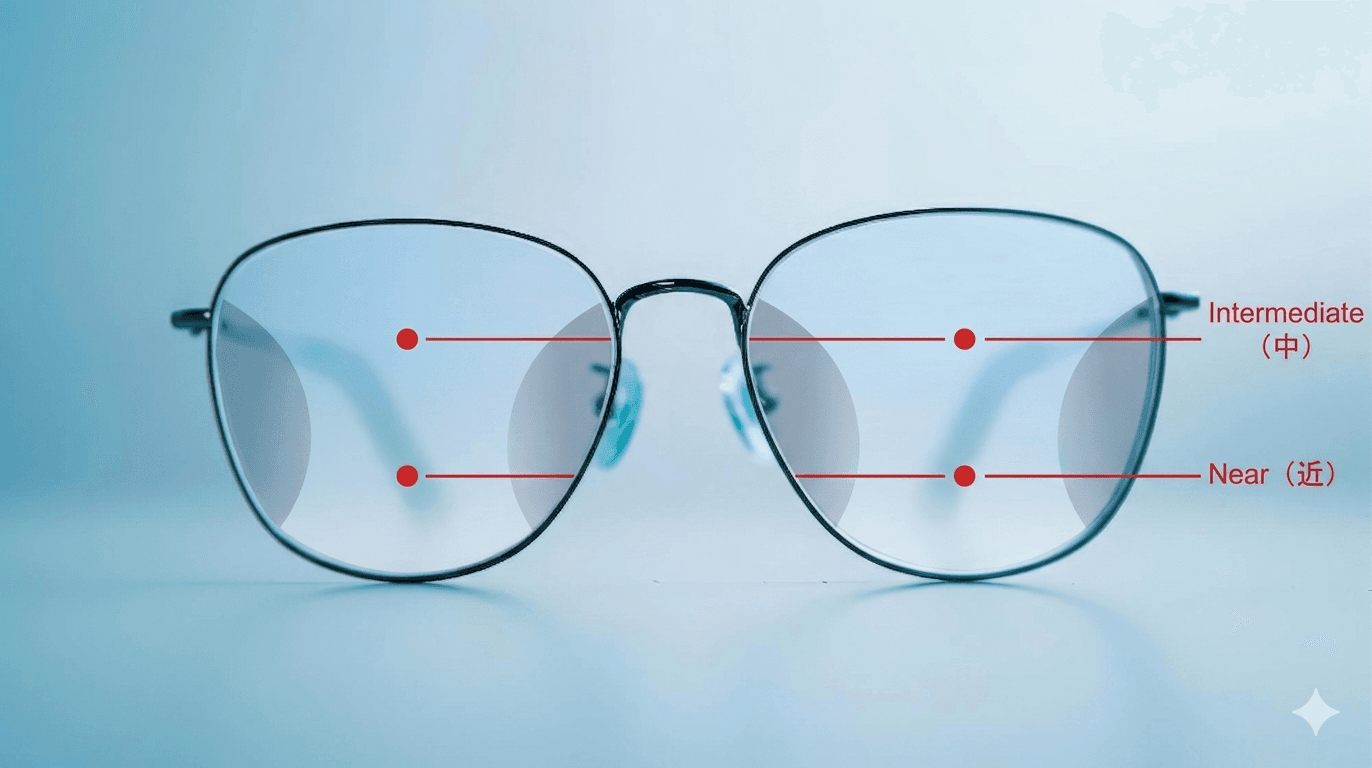
Office
Lenses
Panomatiq Office Lenses are designed & optimized for desk work. They provide a clear & wide view at intermediate & near distances easing the strain on your eyes while working on your computer
Available across all lens types
Bi Focal (FT28)
Lenses
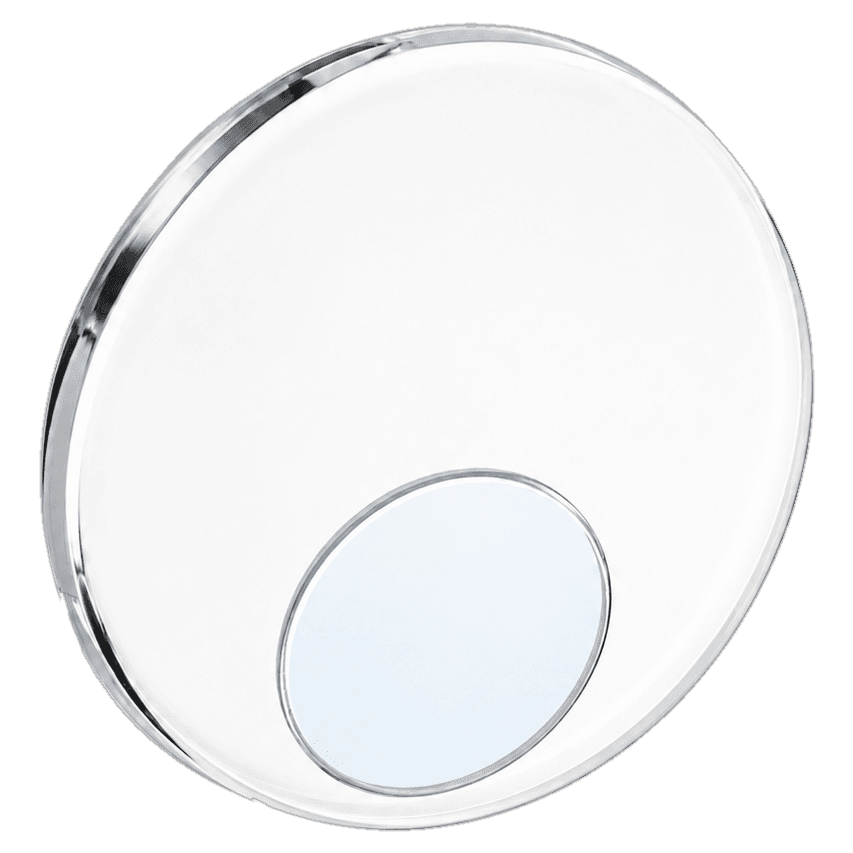
Panomatiq Bi Focal lenses are highly customisable and effective thanks to the advanced technology used for lens manufacturing and design.
Available across all lens types
Key benefits
All-in-One Convenience
Eliminates the hassle of carrying and switching between dedicated reading and distance glasses.
Wide Viewing Zones
Provides broad, clear areas for both distant and close-up tasks without peripheral distortion.
Faster Adjustment
Requires a much shorter adaptation period compared to progressive lenses.
Budget-Friendly
Cost-effective to maintain than progressive or multifocal lenses.
Who should Consider them
Individuals with Presbyopia
Adults (usually over 40) who begin losing the ability to focus on close objects.
People Who Struggle with Progressives
Those who have previously found progressive lenses disorienting or difficult to adjust to.
Professionals Who Do Intense Close-Up Work
Accountants, tailors, or lawyers who prefer specific, wide-bottom reading areas.